

Cataract surgery is one of the safest and most common operations in America, but your results still depend heavily on which cataract surgeon holds the instruments. This guide walks through what a cataract is, how to tell when it is time for surgery, how the procedure works, what can go wrong, and how to find a surgeon with a proven track record.
What is a cataract?
A cataract is a cloudy area in the eye’s natural lens, the clear structure behind the pupil that focuses light. Around age 40, proteins in the lens begin to break down and clump together, and over time that cloudiness spreads and blurs your vision (National Eye Institute).
Cataracts are extremely common. About 25 million Americans have them (American Academy of Ophthalmology), and more than half of Americans age 80 or older either have cataracts or have already had them removed (NEI). Surgery is the only way to remove a cataract.
How often is cataract surgery done in the US?
American ophthalmologists perform roughly 3 to 4 million cataract surgeries every year, making it one of the most frequently performed operations in the country.
How do you know you need cataract surgery?
You likely need surgery when cataract symptoms start getting in the way of everyday life, such as reading, driving, or watching TV (NEI). Early cataracts often cause no symptoms at all. As they grow, the National Eye Institute lists these warning signs:
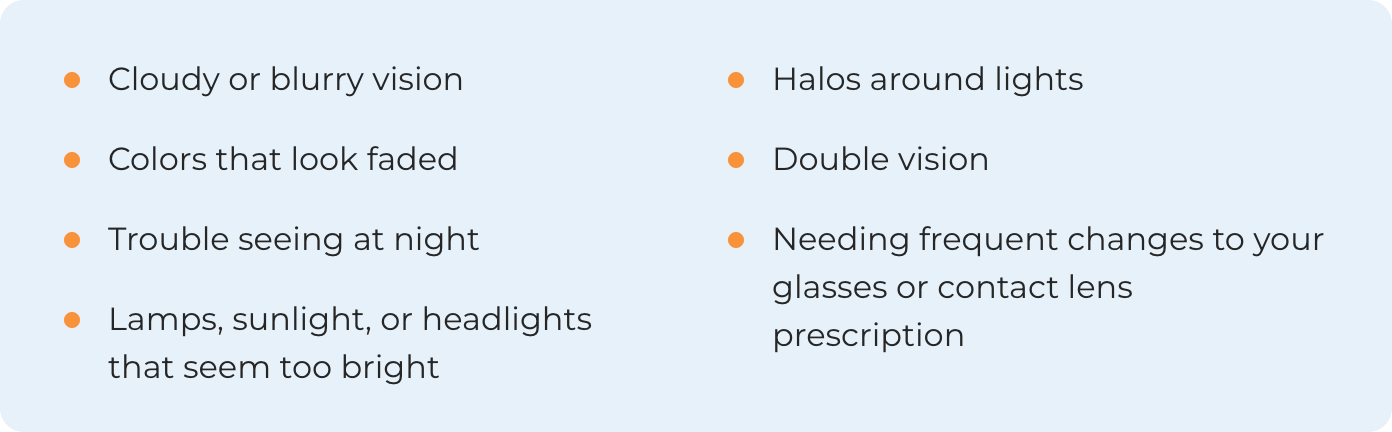
These symptoms can also signal other eye problems, so see an eye doctor rather than self-diagnosing. A dilated eye exam confirms a cataract, and NEI recommends one every 1 to 2 years once you turn 60 (NEI).
Your risk is higher if you have diabetes, smoke, drink heavily, have a family history of cataracts, have had an eye injury or eye surgery, have spent a lot of time in the sun, or take steroid medicines (NEI).
You usually don’t have to rush. Early on, brighter lighting, anti-glare sunglasses, magnifiers, or a new glasses prescription may be enough. NEI notes that waiting usually won’t harm your eyes or make surgery harder later. This is why an appropriate care standard matters: surgery should happen when your symptoms justify it, not before.
How cataract surgery is performed
Cataract surgery removes the cloudy natural lens and replaces it with a clear artificial lens called an intraocular lens (IOL). It is done outpatient, and the operation itself usually takes 15 to 30 minutes per eye (Scripps Health). Here is what a typical procedure looks like:
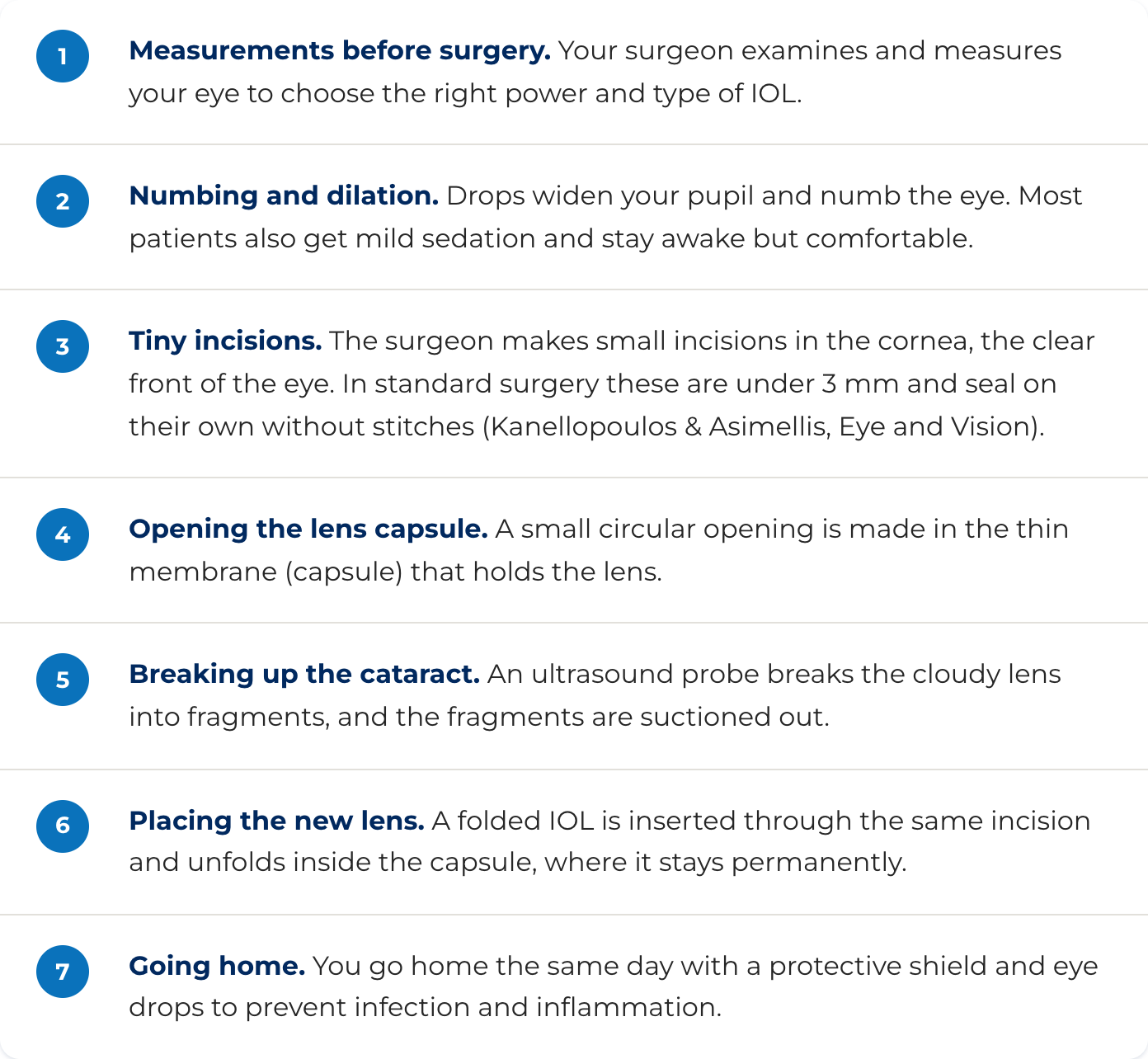
If both eyes need surgery, they are usually done separately. The second eye is often scheduled about a month after the first, and full recovery generally takes about a month (U.S. News via WTOP). The payoff is large: about 9 out of 10 people see better afterward (NEI).
Can your cataract surgeon choose different ways to do it?
Yes. Most US patients have phacoemulsification, but there are three main approaches, and your surgeon will recommend one based on your eye.
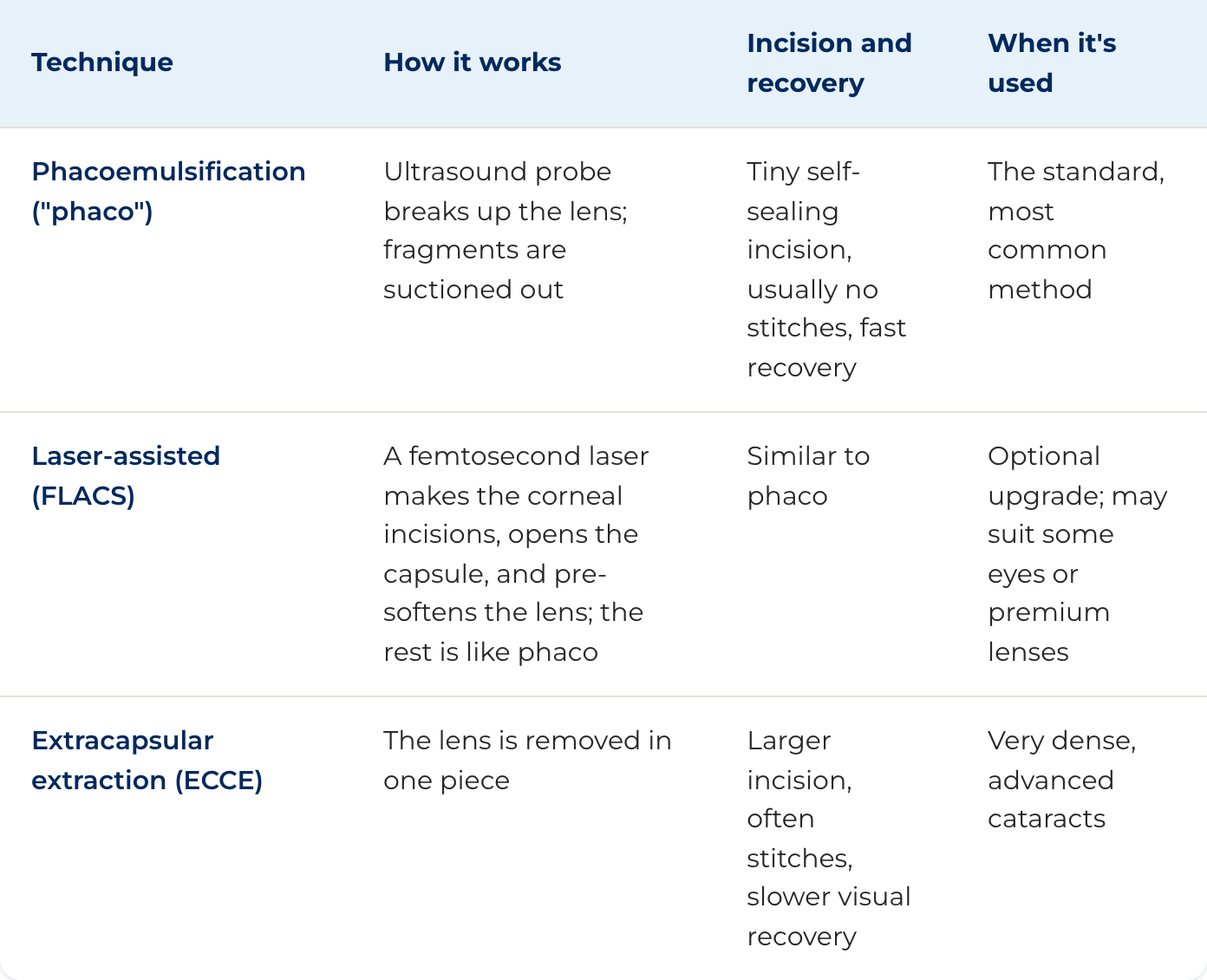
Is laser better? Studies generally find phaco and laser-assisted surgery work about equally well for adults (HealthLink BC). Laser surgery costs more, and insurance typically does not cover the laser upgrade (WebMD). In other words, the surgeon’s skill matters more than the machine.
Lens choices. You will also choose an IOL. Common options include:
- Monofocal: sharp vision at one distance, usually far; you’ll likely still need reading glasses.
- Toric: corrects astigmatism.
- Multifocal or extended depth-of-focus: aims to reduce dependence on glasses at several distances, often at extra cost.
Ask your surgeon which lens fits your eyes and lifestyle, and what it will cost out of pocket.
What complications can happen?
Serious complications are rare, with combined rates of infection, retinal detachment, and persistent swelling under 1% according to the American Society of Cataract and Refractive Surgery (Greenwich Eye). Still, when they happen they can threaten your sight, so it pays to know them.
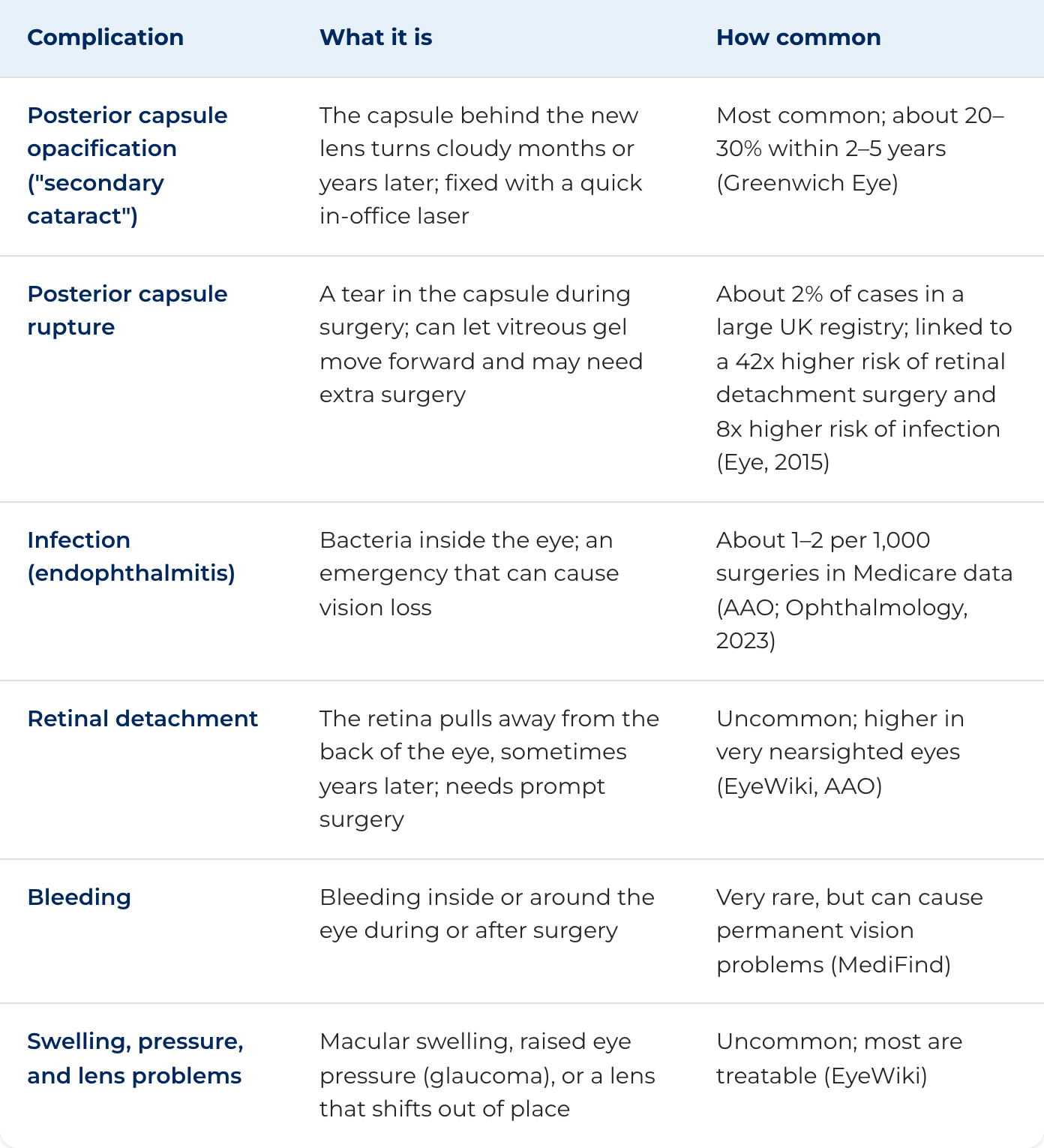
In rare cases, complications can lead to a repeat procedure or permanent loss of sight. These are exactly the outcomes SurgeonCheck tracks.

Why choosing the right surgeon matters
Cataract surgery is routine, but surgeons are not interchangeable. Research consistently shows that complication rates differ from one surgeon to the next.
How to find a good cataract surgeon
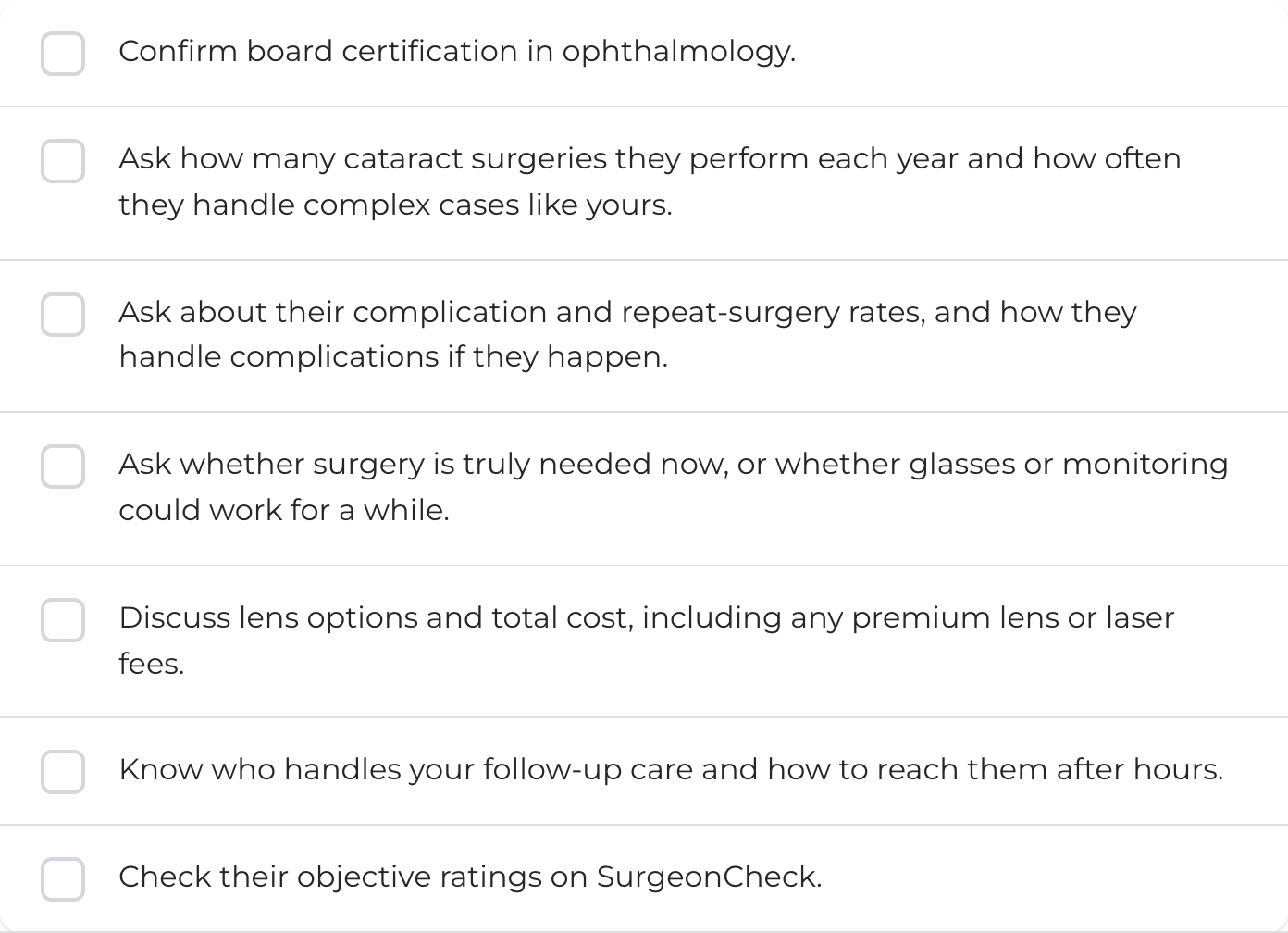
Use this checklist when comparing surgeons:
How SurgeonCheck helps
SurgeonCheck rates individual surgeons using objective data, drawing on a set of nearly 300 quality measures across procedures (Business Wire). Recommendations are refreshed every six months as new data arrive.
For cataract surgery, SurgeonCheck evaluates measures that help minimize an unnecessary procedure, post-surgery bleeding, repeat surgery, infection, and loss of sight, among other outcomes. Each surgeon profile scores four areas:
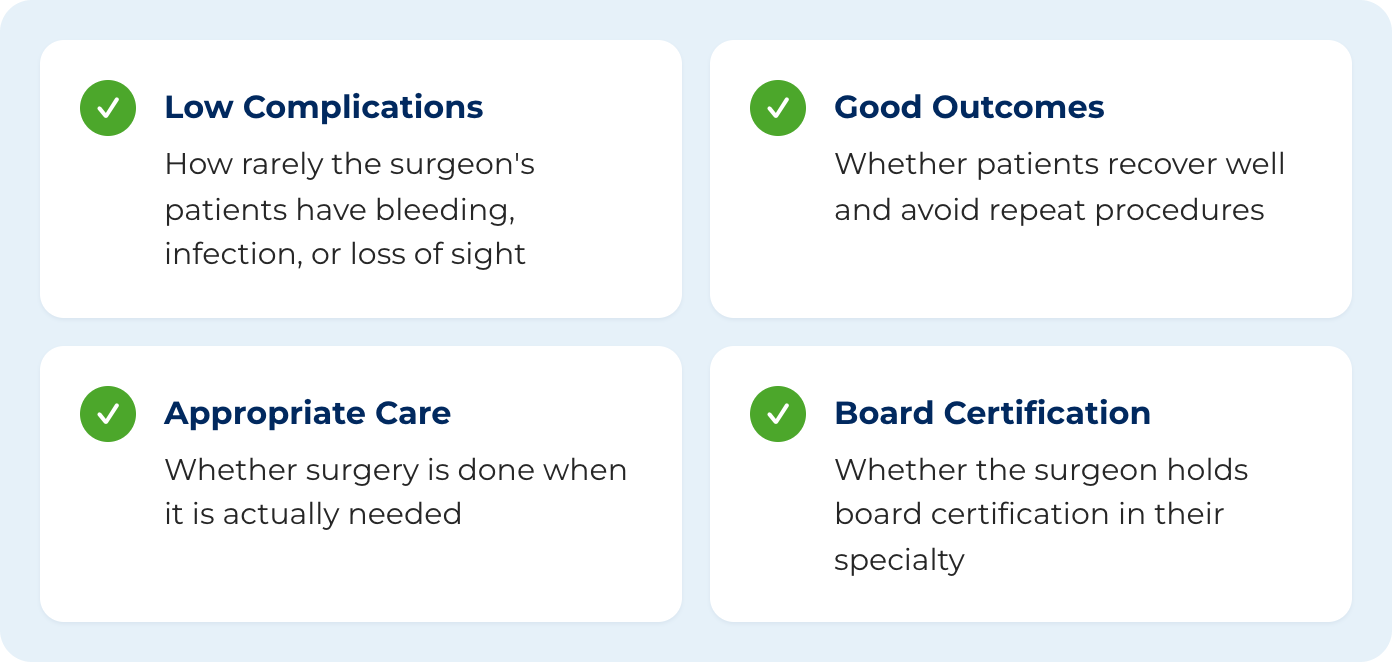

Each surgeon receives a score on a worst-to-best scale, so you can see at a glance how they compare. SurgeonCheck only recommends top-tier surgeons who have been carefully vetted for a track record of great results. Fewer complications mean a smoother recovery, a lower risk of unexpected hospital visits, and better odds of avoiding a repeat procedure.
Ready to find a cataract surgeon you can trust? Search for top-rated cataract surgeons near you at SurgeonCheck.com.
Find top cataract surgeons in your area →
Sources
- Cataracts — National Eye Institute (updated Aug 2026)
- Three things patients should know about cataracts — American Academy of Ophthalmology
- Are you one of the millions about to have cataract surgery? — University of Florida Health Ophthalmology (2024)
- Prevalence, Surgical Trends, and Economic Burden of Cataract in Medicare Population in the United States — American Journal of Ophthalmology (Jan 2026)
- High-volume cataract surgeons have lower endophthalmitis rates — Review of Optometry, summarizing Zafar et al., Ophthalmology (2023)
- Lower volume linked to higher rate of post-cataract endophthalmitis — American Academy of Ophthalmology
- Cataract surgery: volume and complications — AAO EyeNet (2020)
- Characteristics of cataract surgeries billed through Medicare, 2003–2004 — PubMed Central
- Cataract surgery complications — EyeWiki, American Academy of Ophthalmology
- Cataract surgery complications: how common are they? — Greenwich Eye
- UK National Ophthalmology Database study of cataract outcomes — Eye (2015)
- Femtosecond laser-assisted vs. manual phacoemulsification — Kanellopoulos & Asimellis, Eye and Vision (2016)
- Cataract surgery overview — HealthLink BC
- What to expect with cataract surgery — WebMD
- Types of cataract surgery — Vision Center
- Cataract surgery — Penn Medicine
- Cataracts: causes, symptoms and when to consider surgery — Scripps Health
- What are cataracts? Symptoms, diagnosis and treatment — U.S. News, via WTOP (2025)
- Learn about cataract removal — MediFind
- SurgeonCheck launches surgeon recommendation website — Business Wire (Dec 2024)
- Cataract procedure description and measures — SurgeonCheck.com