

A hip replacement can end years of pain. How well it works depends a great deal on who performs it, and on whether it’s the right time to operate at all.
Total hip replacement is one of the most common and successful operations in medicine. The surgeon removes the worn-out ball and socket of your hip joint and replaces them with artificial parts, most often to relieve pain from arthritis.
Because it’s so common, it’s easy to assume any surgeon will deliver the same result. They don’t. Rates of infection, repeat surgery and dislocation vary from surgeon to surgeon, and those differences shape how you’ll feel for years.
A fast-growing surgery
Hip replacements in the US are projected to more than triple between 2009 and 2040. More surgeries means more surgeons performing them, with a wide range of experience and results.

First, do you need it?
The most important decision happens before surgery. In one study, 14% of total joint replacements were judged inappropriate. Surgeons don’t all draw the line in the same place, so it matters that yours recommends surgery when it will truly help you.

A good surgeon looks at the whole picture: how much pain and disability you have, whether your X-rays match your symptoms, what you’ve already tried, and whether your overall health is ready for surgery.

What happens during the operation
After anesthesia, your surgeon reaches the hip through an anterior or posterior approach, removes the arthritic ball, prepares the socket and places the new parts: a socket, a metal stem in the thigh bone and a new ball. Before closing, they test the joint’s stability and range of motion.

Recovery
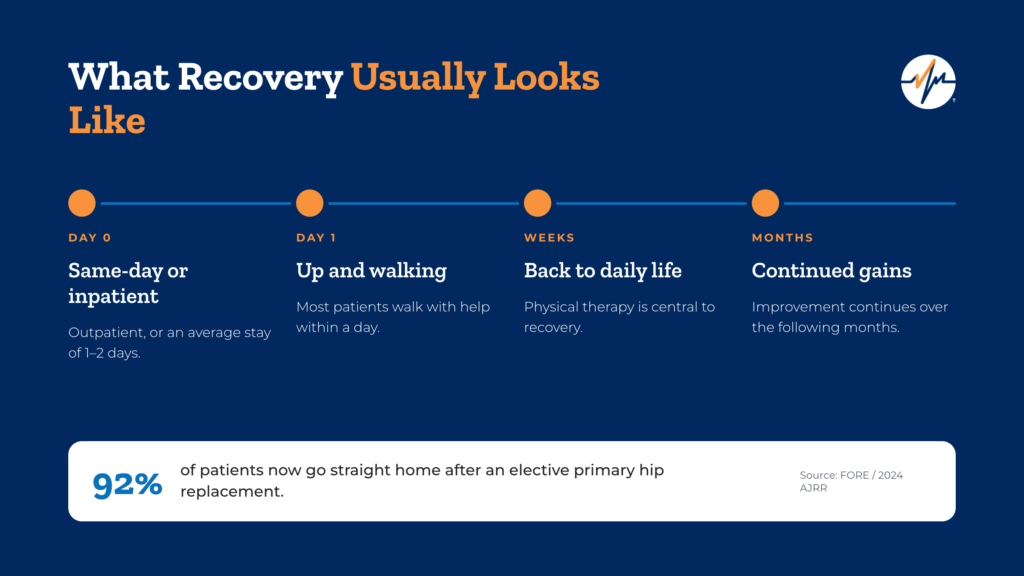
Many hip replacements are now outpatient. When you do stay, the average is one to two days, and most patients walk with help within a day. Physical therapy is central to getting back to daily life, and improvement continues for months.
The measures that matter
Complications are uncommon, but they’re serious when they happen, and some surgeons have them far less often than others. These are a few of the measures SurgeonCheck evaluates for hip replacement.

How to choose your surgeon
Most people choose a surgeon from online reviews, a referral or a friend’s story. None of these tell you how often a surgeon’s patients get infections or need a second operation.

Questions to ask your surgeon
- Have I tried the non-surgical options that make sense for me?
- How many hip replacements do you perform each year?
- What are your infection, revision and dislocation rates?
- Which approach do you use, and why is it right for me?
SurgeonCheck scores surgeons by procedure using nearly 300 outcome-focused quality measures. Only 32% of evaluated surgeons make our recommended list, and we never accept advertising or payment from surgeons or hospitals.

Find top hip replacement surgeons in your area →
This article is for general information and isn’t medical advice. Talk with your doctor about your situation.
Sources
- Singh et al., Journal of Rheumatology, 2019
- Journal of Bone and Joint Surgery, via Becker’s
- FORE / 2024 AJRR Annual Report
- PMC; Scottish Arthroplasty Project; Weill Cornell Medicine