

The Hidden Factor in Your Surgery’s Success
Lung cancer is by far the leading cause of cancer death in the United States. The American Cancer Society estimates about 125,000 Americans will die of it in 2026 — more than colon, breast and prostate cancers combined.
For many patients diagnosed early, the best chance at a cure is a lung lobectomy: surgery to remove the lobe of the lung that contains the tumor. Your right lung has three lobes and your left has two, and most people live full, active lives after losing one.
But here is what most patients are never told. How well a lung lobectomy goes depends heavily on who performs it — and on whether that surgeon has kept up with how the operation is done today.
Two ways to perform the same surgery
There are two ways to remove a lobe of the lung, and they mean very different things for the patient.
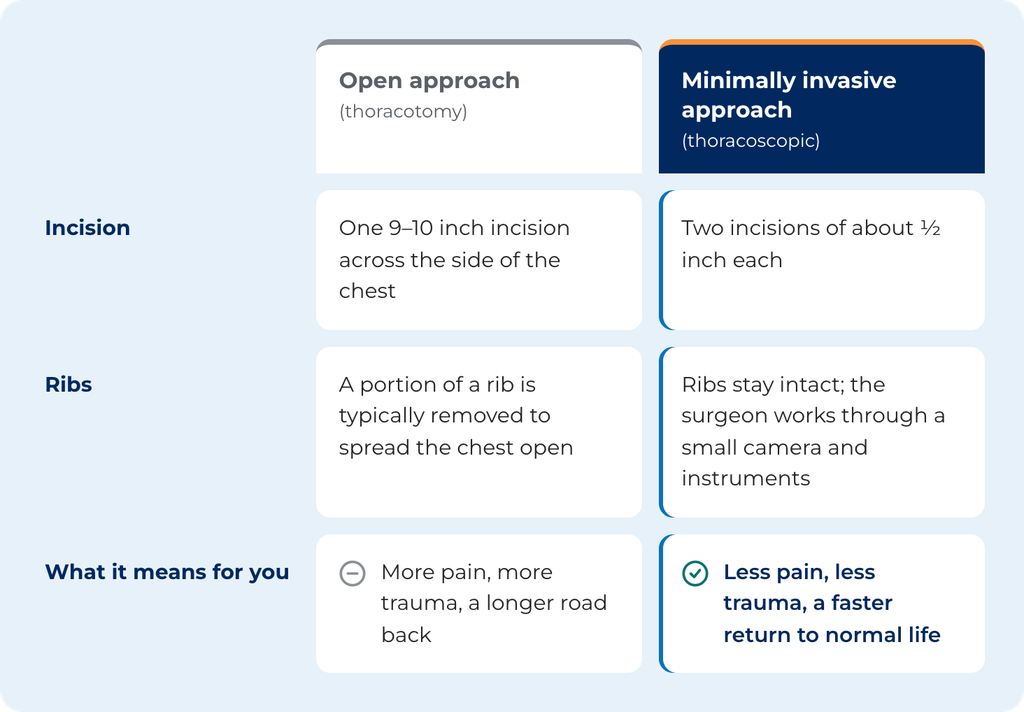
The open approach is the way lung lobectomies were done for generations. The minimally invasive approach — performed with video-assisted or robotic-assisted thoracoscopic surgery — removes the same lobe and the same tumor, without opening the chest.
Why the approach matters so much
Compared with the open approach, a minimally invasive lung lobectomy delivers:
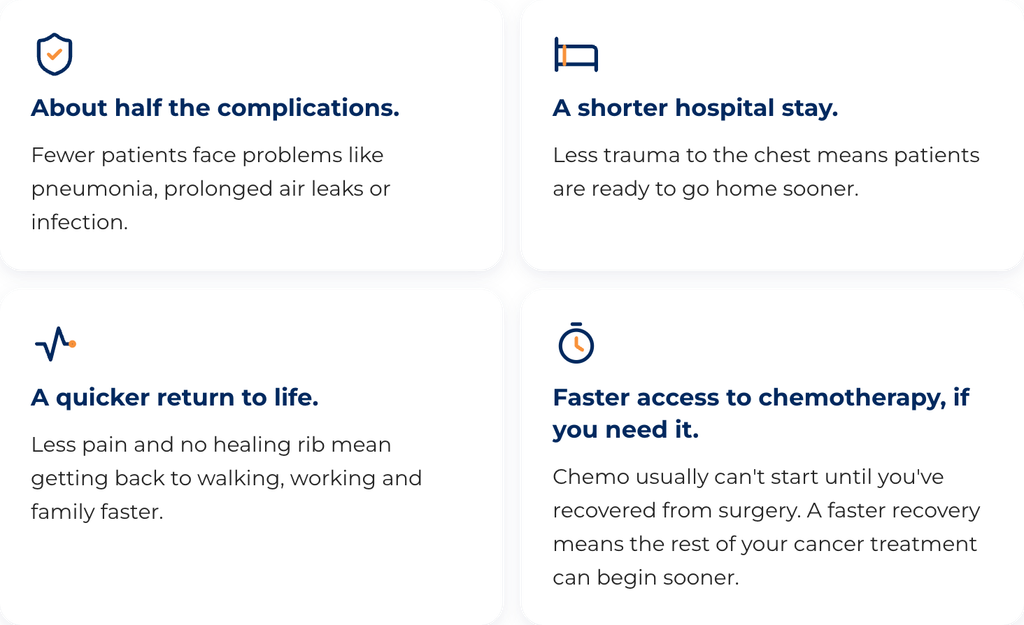
That last point is easy to overlook. For a lung cancer patient, recovering from surgery isn’t the finish line — it’s the gateway to the next stage of treatment.
The surprising truth: many surgeons still do it the old way
With advantages this clear, you might assume every lung lobectomy today is done the minimally invasive way. It isn’t.
Many surgeons still perform lung lobectomies through the open approach. Some trained before thoracoscopic techniques became standard and never fully made the switch. Others simply haven’t invested in learning newer technology. Either way, their patients absorb the cost — in pain, complications and recovery time.
That’s why SurgeonCheck tracks each surgeon’s open procedure rate: the share of their lung lobectomies performed through the open approach. It is the single best indicator of whether a surgeon is keeping up with technology. A surgeon who still opens the chest for most routine lung lobectomies is telling you something important about how they practice.
When you look across health systems, the open procedure rate is still strikingly high in many places — despite everything we know about its disadvantages.
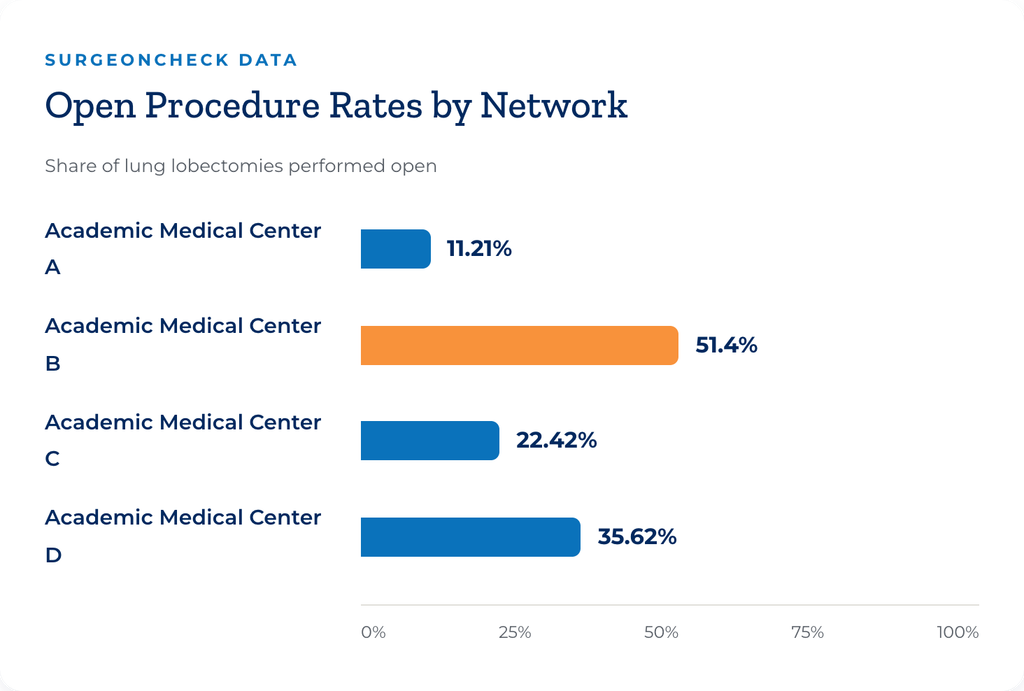
To be fair, an open approach is sometimes the right call — for example, with a very large tumor or one in a difficult location. That’s exactly why the rate matters. An occasional open case is expected. A pattern of open cases is a red flag.
Other complications that vary from surgeon to surgeon
Surgical approach is the clearest dividing line, but it’s not the only one. These outcomes also differ significantly between lung lobectomy surgeons:
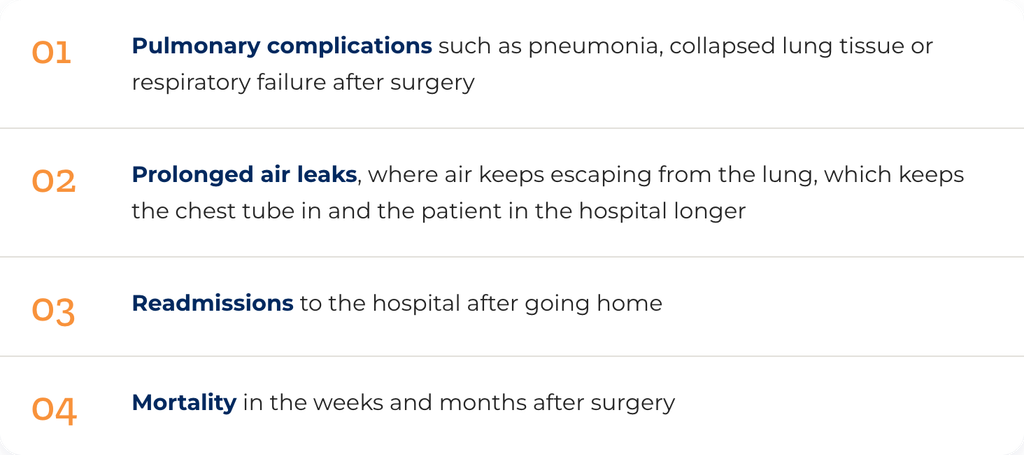
Two surgeons at the same hospital, operating on similar patients, can have very different track records on every one of these measures.
Why patients rarely hear about this — and what to ask
A lung cancer diagnosis moves fast. Most patients are referred to a surgeon within days and feel enormous pressure to schedule surgery right away. Few stop to ask how that surgeon’s results compare with others — and the information usually isn’t offered.
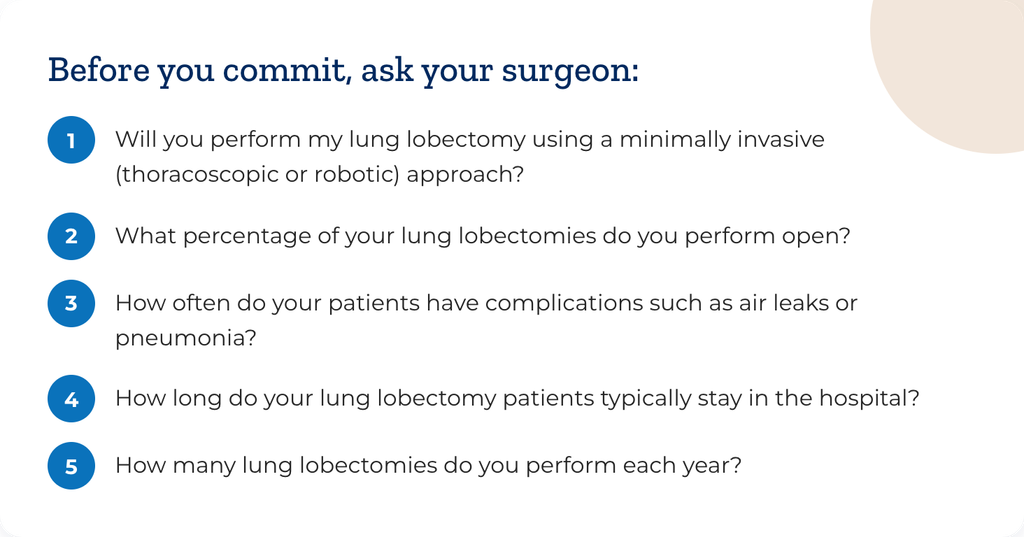
A confident, skilled surgeon should welcome these questions. Getting a second opinion is normal — and with a diagnosis this serious, it’s smart.
How SurgeonCheck helps you choose
You shouldn’t have to rely on luck, a rushed referral or a hospital’s reputation when facing lung cancer surgery. SurgeonCheck gives you the data that’s normally hidden:
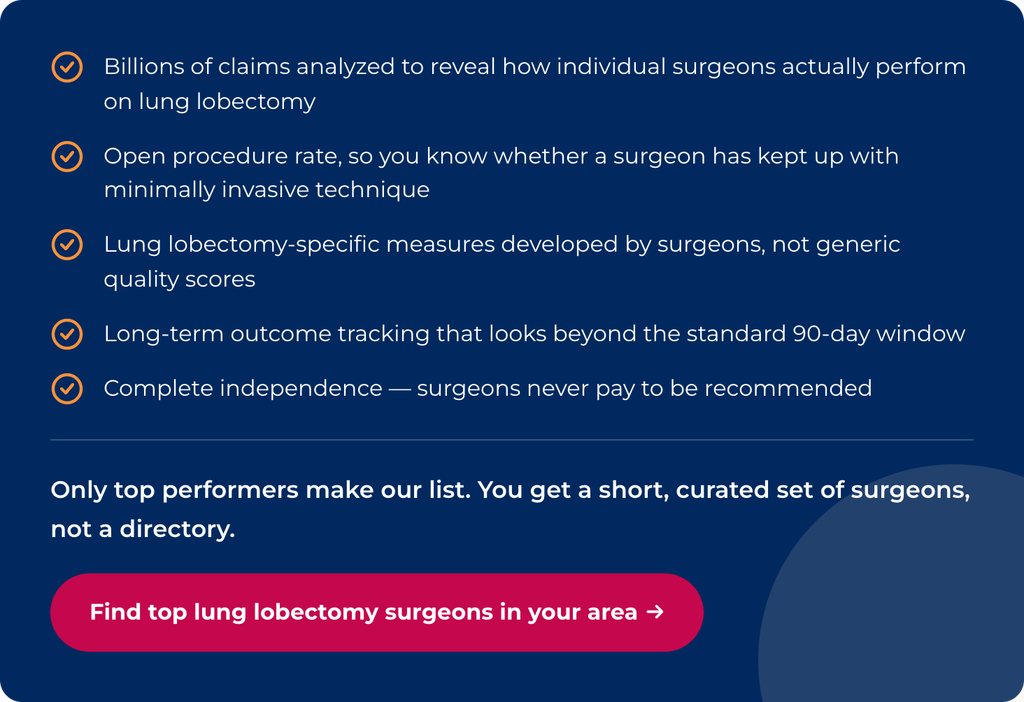
Find top lung lobectomy surgeons in your area →
This article is for general information and isn’t medical advice. Talk with your care team about the right treatment for your situation.
Sources
- American Cancer Society: Key Statistics for Lung Cancer (2026)
- Complication, length-of-stay and open procedure rate figures: SurgeonCheck data